
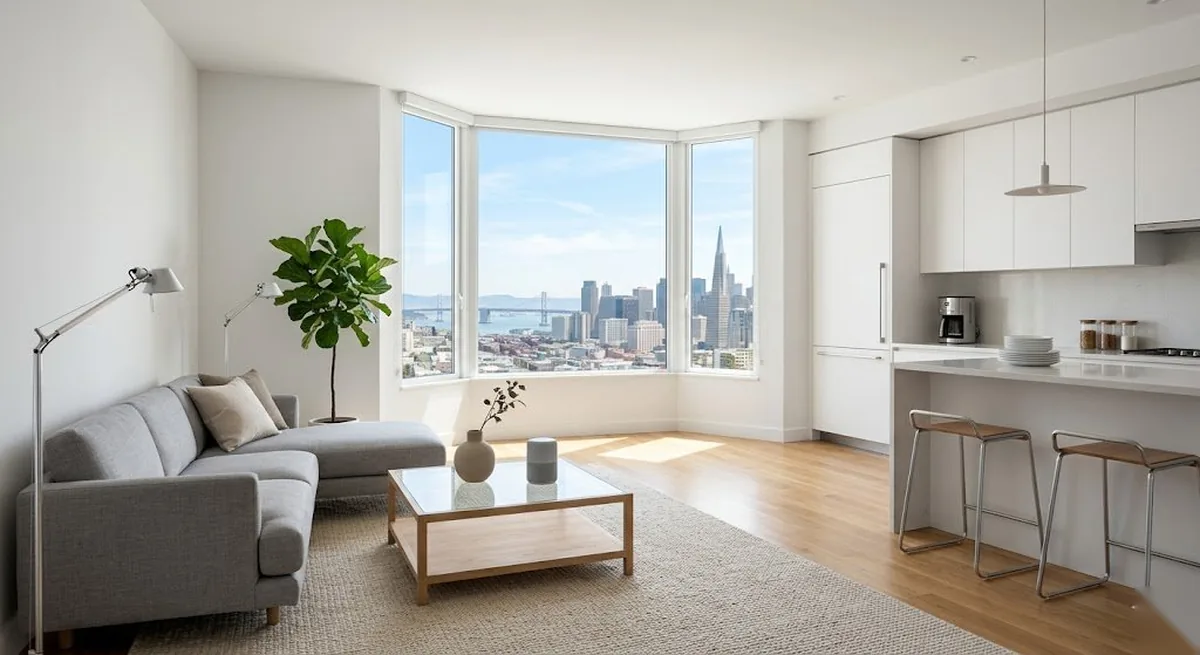
If you have spent any time trying to figure out what a cleaning service actually costs in San Francisco, you have probably noticed the quotes are all over the place. One company comes in at $95 for a one-bedroom. Another wants $280 for the same unit. A third will not give you any number without an in-home estimate first. It is genuinely hard to tell what is fair.
This guide cuts through that. Below you will find current 2026 pricing for standard, deep, and move-in/move-out cleaning across San Francisco and the Peninsula, a plain-English breakdown of what actually moves the number, and enough context to tell whether the quote sitting in your inbox is reasonable.
The SF cleaning market splits into three rough tiers. At the bottom you have gig platforms and individual contractors operating without much oversight. At the top are boutique or hospitality-grade services charging a significant premium. Most homeowners who want consistent, reliable help land in the middle — professional services with vetted cleaners and real accountability. In 2026, that middle tier looks like this:
| Home Size | Standard Clean | Deep Clean | Move-In / Move-Out |
|---|---|---|---|
| Studio Apartment | $120 – $200 | $200 – $320 | $220 – $340 |
| 1 Bedroom | $140 – $230 | $220 – $360 | $240 – $380 |
| 2 Bedrooms | $160 – $270 | $260 – $420 | $280 – $450 |
| 3 Bedrooms | $200 – $330 | $330 – $530 | $350 – $560 |
| 4 Bedrooms | $260 – $420 | $430 – $680 | $450 – $700 |
Worth knowing: These ranges are for professional services — companies with vetted cleaners, liability insurance, and a real checklist. They are not gig platform estimates where you might get a different contractor every time with no accountability if something goes wrong. The low end of each range is real. So is the high end. What separates them is explained below.
A standard cleaning is what keeps a well-maintained home feeling on top of things week to week or month to month. Floors done, bathrooms scrubbed, kitchen wiped down, surfaces dusted. It is not a deep reset — it is maintenance, and it works best as an ongoing service rather than a one-off.
Most standard cleans cover vacuuming and mopping all floors, cleaning and disinfecting all bathrooms, wiping down countertops and kitchen appliances on the outside, cleaning the stovetop, dusting furniture and fixtures, wiping mirrors, and taking out the trash. The microwave gets done inside and out. The range hood gets wiped. Cobwebs get removed.
What it does not cover is the inside of the oven or fridge, inside cabinets, baseboards beyond a light dusting, interior windows, or ceiling fan blades in detail. Those go on the deep clean list.
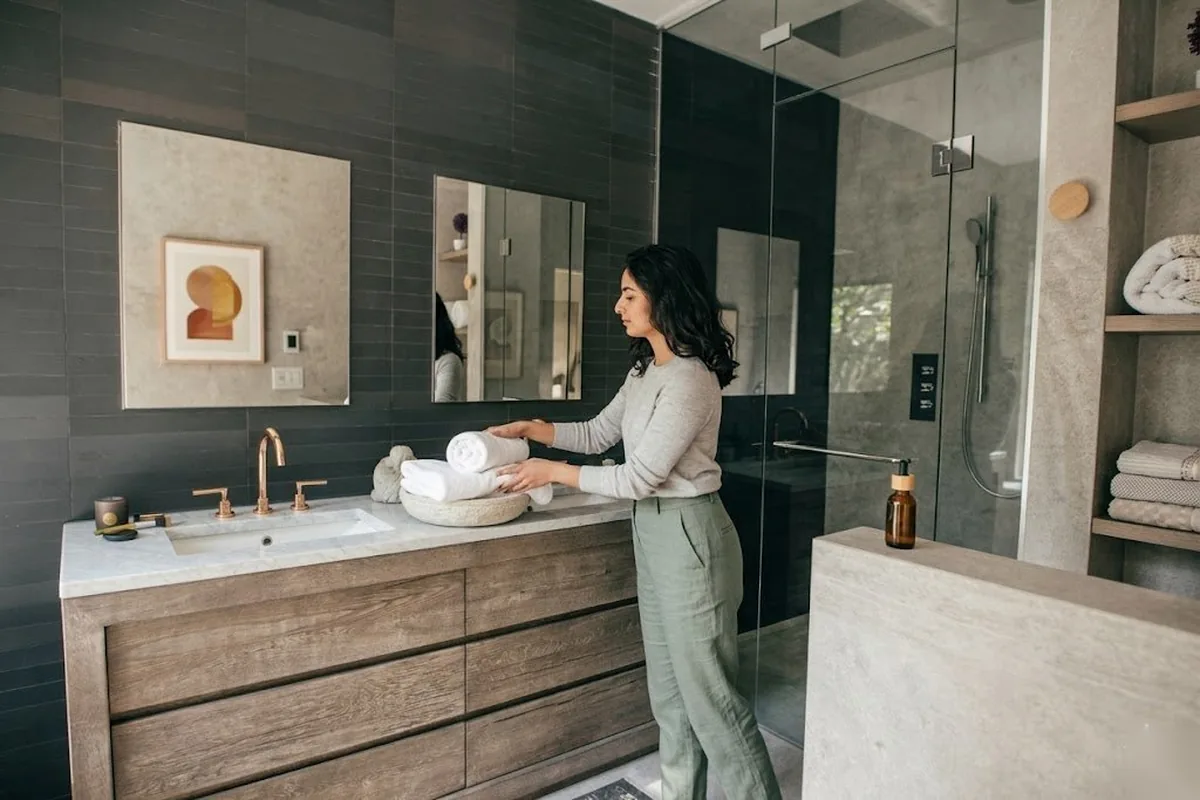
A properly maintained bathroom after a standard cleaning visit.
If it has been more than a month since your home was professionally cleaned, a standard clean is usually the wrong starting point. Most good services will either require a deep clean first or flag that the first visit will run long. That is not upselling — a maintained home and a neglected one genuinely take different amounts of time, and the cleaner who pretends otherwise is cutting corners somewhere.
A deep clean covers everything in a standard clean and then keeps going. Baseboards get hand-wiped rather than dusted. Cabinet fronts get detailed. The oven and refrigerator get cleaned inside. Ceiling fans get properly cleaned rather than just knocked off. Grease buildup around the stove gets addressed. Drains, window tracks, door frames — all of it gets attention that standard maintenance leaves for another day.
It takes roughly twice as long as a standard visit, which is why it costs more. A thorough deep clean on a two-bedroom apartment done properly can run four to six hours. Services that charge a deep clean premium but deliver a standard clean in the same amount of time are not actually doing a deep clean.
Deep cleans make sense when you are starting a new recurring service (the first visit should almost always be a deep clean), when it has been more than 30 days since the last professional clean, after a renovation or construction project, or as a seasonal reset once or twice a year. Some people do one before a big gathering; others use it as a move-in baseline before they settle in.
Worth knowing: Before booking a deep clean, ask the company specifically what is on the checklist. A real deep clean includes handwashed baseboards, inside appliances, detailed grout scrubbing, and ceiling fans — not just a longer standard visit. If they cannot tell you exactly what is included, that is a sign the distinction is mostly marketing.
Move-in and move-out cleaning is in its own category. It is designed for empty or near-empty homes and goes further than even a deep clean — inside every cabinet and drawer, closet shelves and rods, window tracks, doorknobs and switch plates, interior doors wiped down in detail, walls spot-cleaned for scuffs, and showers and tile grout scrubbed at surface level.
"In San Francisco's rental market, a thorough move-out clean almost always costs less than a single day of lost security deposit."
San Francisco landlords are thorough at walkthrough, and a dirty unit at move-out is one of the most common reasons for deposit deductions. A professional move-out clean done to a real standard usually runs a fraction of what even a modest deposit dispute costs you. On the move-in side, a lot of tenants do not trust that the previous occupant left the place truly clean — and a surprising number of the time, that instinct is right.
Book your move-out clean for the day after your furniture is out, not the day of. Cleaning around boxes and furniture is slower, harder, and produces a worse result. An empty unit gets done faster and more thoroughly. If you are coordinating a same-day move and key handoff, schedule the clean for the morning after and your walkthrough for the afternoon.
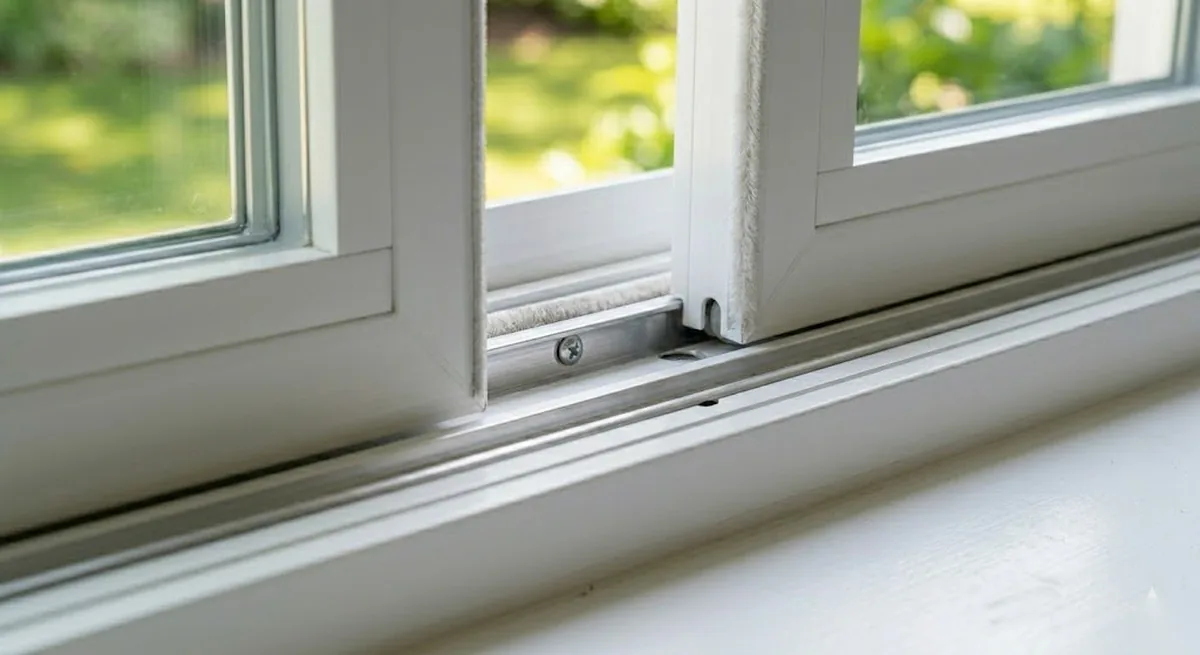
Move-in/move-out cleans cover every surface, including inside cabinets, window tracks, and tile grout.
The ranges in the table above assume a reasonably maintained home. A few things consistently add time and cost, regardless of which service tier you are booking.
Pets are the most common one. Hair works into everything — upholstery, baseboards, vents, floor corners — and adds real time to every surface. Most professional services account for this in the quote, and it is fair for them to do so. Home condition is the other big one: a home that has not been touched in months takes two to three times longer than one that gets cleaned regularly. Some companies quote for estimated condition upfront; others adjust on arrival. Worth asking before you book.
Extra bathrooms add up quickly. Bathrooms are the most labor-intensive rooms in any home, and each additional full bath is a meaningful time addition. Clutter slows things down too — cleaning around objects is slower, and some areas simply become inaccessible. Then there are add-ons: inside the oven, inside the fridge, interior windows, laundry, carpet cleaning. Almost every service prices these separately regardless of what tier you booked.
Finally, one-time visits cost more than recurring ones. If you are only booking once, expect to pay toward the higher end of any range. Recurring service unlocks lower per-visit rates because a maintained home is faster and more predictable to clean.
Most professional cleaning services in San Francisco offer tiered pricing based on how often you book. Weekly plans typically come in 15 to 25 percent below a one-time rate. Biweekly lands around 10 to 18 percent off. Monthly is usually a small discount, maybe 5 to 10 percent. One-time bookings get no discount at all.
For most SF apartments, biweekly is the sweet spot. The home stays genuinely clean rather than periodically reset, and the per-visit rate is meaningfully lower than one-time or monthly pricing. For a studio or one-bedroom with one or two people and no pets, monthly can be perfectly adequate. Weekly service makes the most sense for families, people with pets, or high-traffic homes where things get messy fast.
Gig platforms classify their cleaners as independent contractors. The platform often takes 25 to 35 percent of the booking as their cut, which means a $90 booking might net the cleaner $55 to $65 for a two-hour job. At that rate, rushing is rational. Thoroughness is the first thing that goes.
There is also the insurance question. Professional services carry general liability and usually workers' compensation. An independent contractor booked through an app may carry neither, which means if something gets broken or someone gets hurt in your home, you are dealing with a support ticket rather than a business relationship.
What you actually get with a professional service: a vetted cleaner who knows your home, a published checklist they are accountable to, a business with a reputation on the line, and a clear process for handling complaints. If something gets missed, a real service sends someone back within 24 to 48 hours at no charge. That is what the price difference reflects.
When you have a number in front of you, here is what to look at beyond the dollar amount. Is the quote flat-rate or hourly? Flat-rate is almost always better for the customer — it is predictable, and it does not reward slow work. Is the checklist in writing somewhere? A company with a published task list is more accountable than one that describes their service in vague generalities. Can you reach a real person with a phone call? A named contact and an actual number matters when something goes wrong.
Ask about the re-clean policy. Any reputable service will return within 48 hours at no cost if something was missed. It should be standard practice, not a feature they brag about. And ask whether the cleaners are employees or independent contractors — it tells you a lot about how much quality control the company actually has.
If you are in Burlingame, Daly City, South San Francisco, San Mateo, or Redwood City, pricing tracks closely with San Francisco rates. The same professional services typically cover the whole region, and labor costs are similar throughout. Parking and traffic logistics are usually easier on the Peninsula, which makes scheduling smoother — but it does not change the quoted price much in either direction.
At a biweekly rate of around $160 to $180 for a one-bedroom, you are spending roughly $4,000 to $4,700 a year to hand off a task that takes most people two to three hours a session. At SF wages — professional or otherwise — that math almost always makes sense. But the math is only part of it.
A home that gets professionally cleaned on a real schedule is actually clean. The ceiling fan you have been meaning to get to for six months gets done. The grout gets scrubbed. The baseboards get handwashed. These are not cosmetic details — they affect air quality, material condition, and genuinely how a space feels to be in day to day. The compounding effect over months and years is not trivial.
For most SF households, the question is not really whether professional cleaning is worth it. It is picking the right frequency and service level for your actual situation.
Good luck finding the right fit. 🌿
ArriveClean serves San Francisco and the Peninsula. Flat-rate pricing, professional cleaners, and a satisfaction guarantee. Get your quote in under 60 seconds.
GET INSTANT QUOTE →